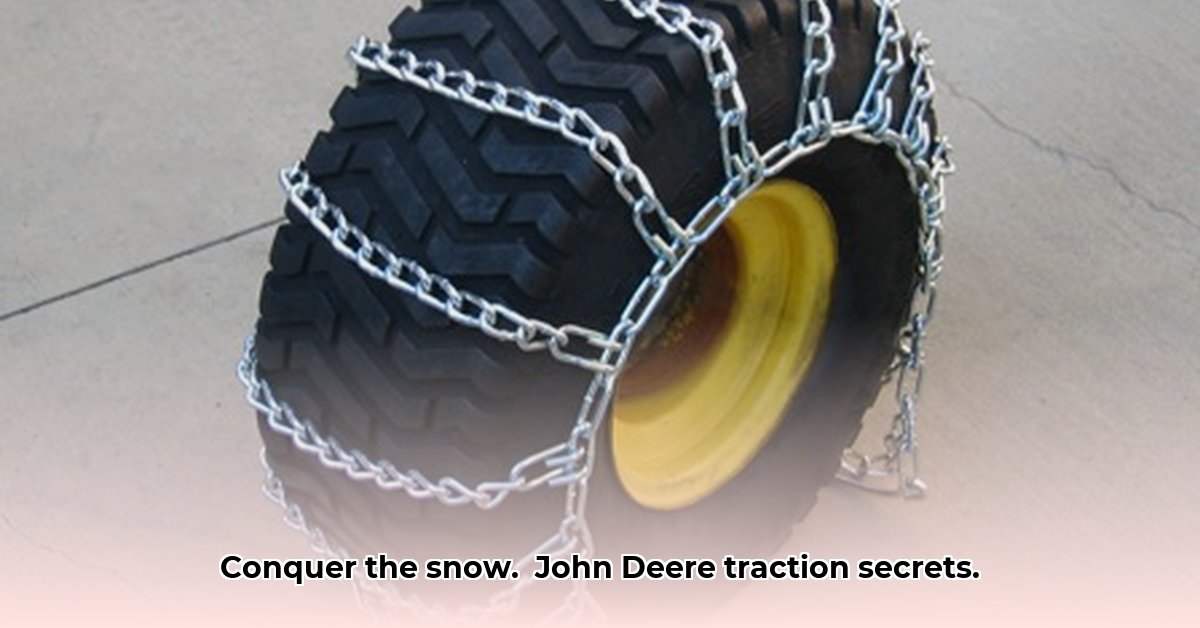
Snow Chains for John Deere Lawn Tractors: Your Winter Workhorse's Secret Weapon
Winter's icy grip can significantly hinder the productivity of your John Deere lawn tractor. However, equipping your machine with snow chains offers a reliable solution for maintaining traction and operational efficiency during challenging winter conditions. This comprehensive guide will equip you with the knowledge and steps needed to select, install, and utilize snow chains effectively and responsibly, while also exploring more sustainable long-term solutions. For more information on your John Deere model, check out this tractor serial number lookup.
Choosing the Right Chains: A Perfect Fit for Your Deere
Selecting the appropriate snow chains is critical for both safety and optimal performance. Improperly sized chains can result in reduced traction, potential damage to your tractor's components, and even hazardous driving situations. Begin by carefully determining your tractor's tire size; this information is usually found in your owner's manual or printed directly on the tire sidewall. Use this information to consult a reputable manufacturer's sizing chart to find the perfect fit.
Key Considerations:
- Tire Size: Precise measurement is paramount. Chains that are too small might slip, while those that are too large will not fit. Double-check your measurements before purchasing.
- Chain Type: Common types include V-bar and ladder chains. V-bar chains are generally suited for packed snow and ice, offering a good balance of traction and ease of installation. Ladder chains, with their heavier construction, provide superior traction in deeper snow and more challenging conditions but may be more difficult to install.
- Material: Invest in high-quality chains made from durable, hardened steel. Lower-quality chains may break or wear out prematurely, leaving you stranded and potentially causing damage to your tractor.
Compatibility Chart (Sample): (Always verify compatibility with your owner's manual and the chain manufacturer's specifications)
| John Deere Model | Typical Tire Size | Recommended Chain Type | Notes |
|---|---|---|---|
| 1025R | 26x12-12 | V-bar or Ladder | Suitable for varied snow conditions; precise sizing is crucial. |
| X300 | 20x10-8 | V-bar | Ideal for lighter snow; ladder chains might be too large. |
| X500 | 23x10.5-12 | V-bar or Ladder | Chain type selection depends on anticipated snow depth. |
Important: Before using chains on your tractor, always perform a test fit in a safe area to ensure proper fit and to practice installation.
Step-by-Step Installation Guide
Proper installation is crucial for both safety and effective traction. Follow these steps carefully, referring to your chain manufacturer’s instructions for detailed diagrams and model-specific considerations.
Preparation: Park on a level surface, firmly engaging the parking brake. Safety first!
Positioning: Carefully drape the chains around the tires, ensuring cross-chains are correctly aligned. Some chains have specific installation instructions.
Securing: Use the chain's tightening mechanisms (clamps or hooks) to secure them firmly to the tire.
Tension Adjustment: Tighten chains for a snug fit; avoid over-tightening, which can damage chains or your tractor. The tire should rotate freely.
Rotation Check: Rotate the tires manually to ensure proper chain seating and tension. This identifies potential issues early.
Final Inspection: Before starting the tractor, re-check all fastening mechanisms. A loose chain poses significant safety risks.
Safe Usage Practices: Smooth Operator
Snow chains significantly enhance traction, but they also alter your tractor's handling. Remember these safety precautions:
- Reduced Speed: Drive considerably slower than usual. Snow chains are not designed for high-speed operation.
- Gentle Turns: Make wide, gradual turns to prevent chain binding or breakage. Avoid sudden movements.
- Smooth Operation: Avoid abrupt acceleration or braking to minimize chain slippage and protect tractor components.
- Surface Awareness: Only use chains on snow or ice. Driving with chains on paved surfaces damages both the chains and the road surface. Isn't it interesting how a seemingly simple tool requires such precise handling? This highlights the importance of diligent operation and regular maintenance.
Maintenance and Storage: Extending Chain Lifespan
Proper care significantly extends the lifespan of your snow chains, preventing premature wear and tear.
Cleaning: After each use, thoroughly clean the chains, removing mud, ice, salt, and debris to prevent rust and corrosion. This is crucial for maintaining chain integrity and preventing rust.
Drying: Allow chains to air dry completely after cleaning to prevent rust. Dryness is key to preventing corrosion.
Storage: Store chains in a cool, dry location, ideally in their original container, to protect them from the elements.
Regular Inspection: Before each winter season and after heavy use, meticulously inspect chains for wear, damage, or broken links. Replace damaged chains immediately.
Sustainable Alternatives: Thinking Beyond Chains
While snow chains offer immediate winter traction, considering sustainable alternatives is crucial for long-term cost savings and environmental responsibility.
Specialized Winter Tires: Winter agricultural tires, designed with unique tread patterns and rubber compounds, provide superior grip on snow and ice without chains.
Improved Soil Management: Proper soil management and drainage can reduce ice buildup, lessening reliance on chains.
Innovative Traction Aids: Emerging technologies continue to explore environmentally-friendly alternatives.
Conclusion: Responsible Winter Traction
Maintaining your John Deere's operational efficiency throughout winter is important for timely agricultural tasks. Snow chains are a valuable tool, but responsible use, coupled with exploring longer-term sustainable options and safe driving practices, contributes to both your tractor's longevity and responsible environmental stewardship. The proper use of snow chains is just one piece of the puzzle when it comes to efficient winter operation. A proactive approach to soil management and careful consideration of alternative traction methods further contribute to a more sustainable agricultural practice.